
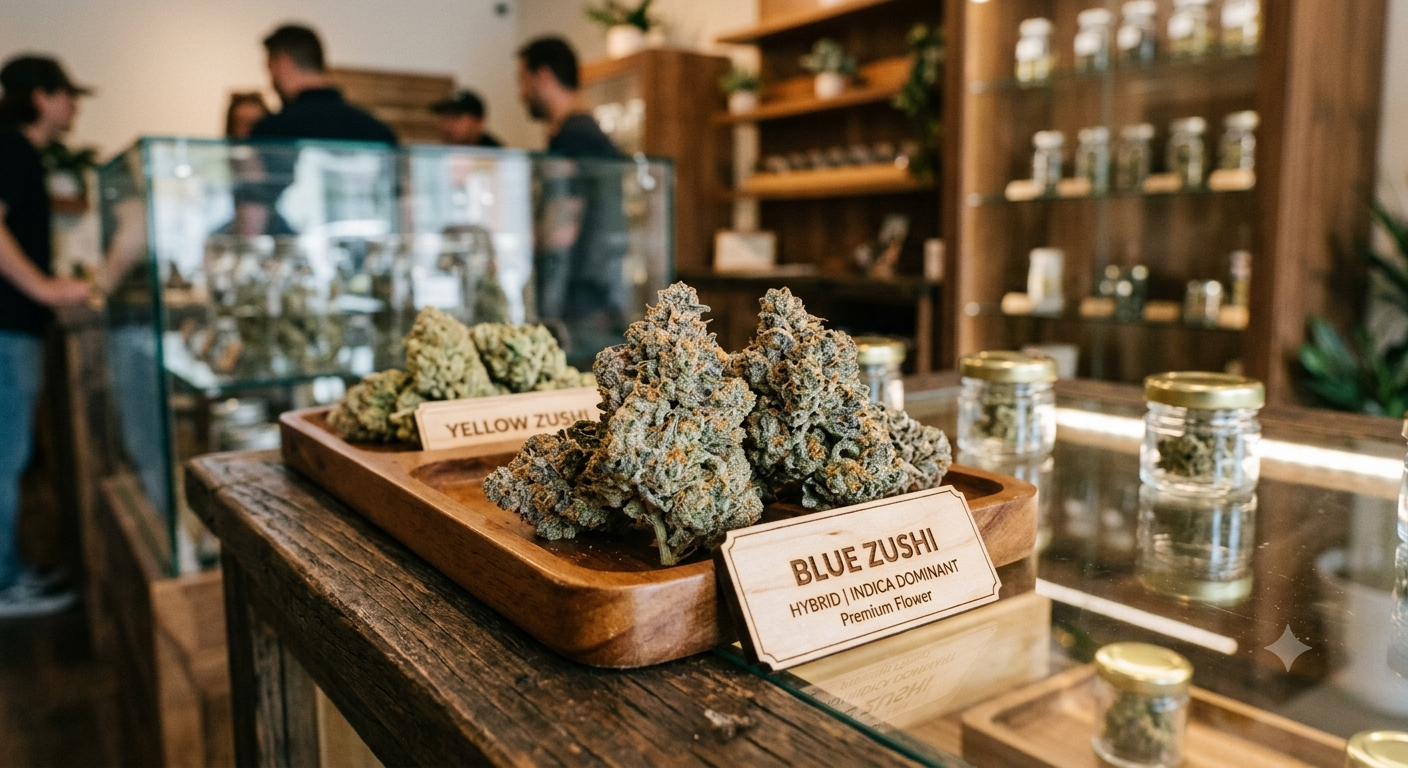
Zushi has been the talk of the town for cannabis connoisseurs looking for something beyond just a quick hit. Its resin-coated, thick buds and layered terpene profile distinguish it from the average flower on dispensary shelves. If you want to know how to identify premium Zushi strain flower, there’s an easy and quick answer. First and foremost, look at bud structure, trichome density, curing quality, and aroma.
It took more than ten years to make, and Golden Garden perfected small-batch cultivation techniques so each jar reflects the same level of craft. We take time with every harvest, slowly curing for flavor and potency and never rushing the plant or chasing trends. Our approach to mixed-light cultivation and terpene preservation is worth checking out for yourself.
Zushi is a hybrid that has a sweet, gassy aroma and a tight, dense bud structure that is heavily frosted with trichomes. It's bred from a combination of genetics that tends to drift toward relaxation without the heavy sedation that some indicas can provide, and that's why it's gained a loyal following of people looking for a balanced, flavorful smoke.
What makes Zushi special, though, is not just the name, but what goes into it. There are cheap, mass-produced versions of Zushi, but they rarely replicate the nuanced flavor and smooth burn that define the strain at its best. That gap between average and exceptional is exactly why it’s important to learn what separates the two before you purchase, especially for anyone looking for premium craft cannabis in NY.
How to Identify Premium Zushi Strain Flower
Just because a jar says Zushi doesn’t mean it’s the same. A few physical markers make it easier to separate quality flowers from filler.
These little things make a very different smoking experience and are the fastest way to assess quality before a single gram comes off the shelf.
Smell is one of the most honest indicators of how well a batch was grown and cured. Good Zushi smells sweet, gassy, almost like a dessert, with subtle earthy undertones underneath. If the jar smells flat, grassy, or like hay, that’s usually a sign that the flower was rushed through drying or stored poorly.
Terpenes are fragile compounds, and they degrade rapidly when exposed to heat, light, or poor humidity control. When a grower stops to slow-cure their harvest, the aromatic oils are preserved, which is why the Zushi strain aroma you get straight from a well-run facility tends to be far more vivid than what’s found in mass-market flower. That aroma is not just a nice smell; it is a taste of the flavor and effects you will find inside the bud.
The best premium cannabis flower isn’t about spending more money for a flashier label; it’s about consistency, safety and a better overall experience. Lower-tier flower is often grown in high-stress conditions, which can lead to a harsher smoke, inconsistent potency, and a much shorter shelf life once opened.
But premium flower goes through careful nutrient management, proper curing, and lab testing before it ever hits the shelf. Quality-conscious shoppers immediately notice that difference in the way the flower burns, the aroma, and the effects. It’s a small-batch mentality that sees each harvest as a finished product, not a rushed one.
If you know what to expect from Zushi, you can have realistic expectations before your first session. The majority of users describe a mellow, relaxed onset that builds up, rather than one that slams into you.
That predictable, layered experience is what most people are looking for from a reliable Zushi strain guide, a general sense of how a strain is going to feel before they commit to a jar.
The difference between an average flower and an exceptional flower is usually a few forgotten details of cultivation and post-harvest handling.
Each of these steps takes more time, which is why high-quality cannabis flower is almost always a little more expensive than flower grown for speed and volume.
Finding a trusted source is just as important as knowing what to look for. Not all dispensaries put the same care into stocking their shelves with regards to sourcing, testing, and freshness.
If you’re searching dispensaries for premium cannabis flower in NYC, look for growers who post their lab results, discuss their curing process, and focus on small batches instead of mass production. That transparency is often the best indication you’re dealing with a cultivator who actually cares about the final product, not just moving inventory.
The right Zushi flower is purchased on the strength of the process behind the jar and not just the name stamped on the label. Trichome density, aroma, curing, and lab-tested potency all tell the real story of quality, even before the first spark.
Golden Garden was created for this type of connoisseur, one who notices nuance and expects consistency batch after batch. Along with mixed-light cultivation, slow cures, and a deep reverence for the plant to build a flower to be enjoyed, this process is not rushed. See the difference small-batch cultivation makes for yourself.
Head over to the current strain lineup and visit Golden Garden today to find premium flower cultivated with intention.
Well-cured Zushi can maintain its flavor and potency for several months without any degradation if stored in an airtight container, away from light and heat. Keeping the jar somewhere cool and dark, away from humidity fluctuations, will help keep that freshness even longer.
Color alone is not a good guide; deep green with purple tinges is common in good Zushi, but trichome coverage and bud density are much more important than shade. When you look closely, two jars can be almost identical in color but wildly different in strength and taste.
Yes, terpenes go bad fast in air, light, and varying levels of humidity, making the aroma and flavor dull even if the bud looks intact. Once those terpenes are evaporated, there’s no amount of gentle handling after that that can re-create the original aroma.
Hand trimming is a gentler process that allows you to preserve more trichomes and do less damage to the buds, which results in a smoother smoke and a more pungent aroma than machine-trimmed bud. It also gives growers the ability to look at each bud individually and spot quality issues that automated trimmers are known to miss.
It is crucial to ensure you have data on the potency levels, terpene content, as well as results of testing the presence of pesticides, heavy metals, and microbes. The COA’s related to this issue should be readily available or not even be concealed at all.